

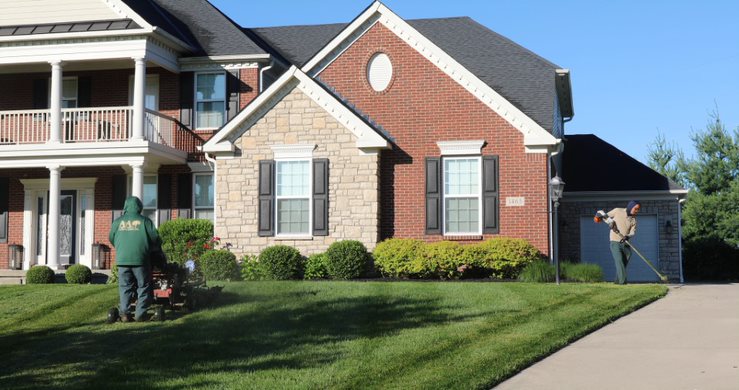
Fire up the mower—or hire a company—and give your home great curb appeal
The COVID-19 pandemic left many feeling that 2021 is just an extension of 2020. But spring has sprung, and it’s time to get your home’s lawn and yard in shape.
If you are a new homeowner, the first question is: DIY or hire a professional? Even if you are an old hand at lawn care, yard work or landscaped gardening, you still might need a list to remind you of spring to-dos.
Marysville, Ohio-based Scotts Miracle-Gro Co., which started in 1868 and now is a multinational seller of lawn-care and gardening products, provides tips for spring, including:
• Tune up your lawn mower.
• Clean up the twigs and branches leftover from winter’s snow, ice and winds.
• Fill in the bare spots in your lawn and use a weed-elimination treatment.
• Fertilize your grass.
• Edge flower/vegetable beds.
If you’re not a do-it-yourselfer, because of time or health reasons, for instance, you have a choice of many area companies to help you keep your lawn and yard looking great. Reports show that the industry is approaching $100 billion in revenue nationwide, with more than 70% of companies employing one to four people.
“Lawn care requires ongoing maintenance,” Andrew Wesselman, co-owner of A&A Lawn Care & Landscaping in Florence, says. A&A is one of the largest lawn-care and landscaping companies in Northern Kentucky, servicing about 10,000 residential and commercial customers annually with 120 employees at peak season. “You can’t just do one thing, and then it lasts forever.”
Wesselman says he lets customers know that hiring a professional means that they are getting well-trained lawn experts who learn about the latest practices and products, such as controlling weeds, including nutsedge, wild violets and crabgrass.
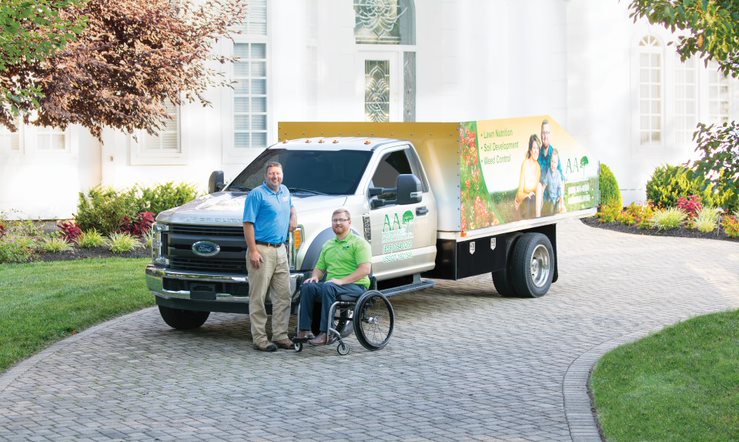
“Some of the products that it takes to control those types of weeds are just not available to the consumer,” he says. Many states require certification or licensing for applying certain pesticides and herbicides.
“The biggest thing is getting the pre-emergents down in the spring and following a good nutrition plan,” Wesselman says. “And we recommend aeration every year in the fall. If the turf density is patchy or thin, we recommend overseeding after that and then using nitrogen in the fall.”
He adds: “You have to think of a strand of grass as a living thing—trees, bushes, humans, we all don’t just live forever, so grass will eventually die out, and that why it’s a good practice to continue to do overseeding if not every year, at least every other year, to keep turf density, to keep the turf thick.”
Wesselman, who started the business in 2007 after working at a retail garden center owned by his family, says his company also designs, installs and maintains landscaping.
“Most of the landscaping that we do is to softscape the trees and shrubs,” he says. “A lot of times, people want no maintenance or low maintenance. You can get lower-maintenance trees and shrubs, but there’s going to be some work that goes into maintaining it from a weeding standpoint or a pruning standpoint.”
