

From Neighborhood to City to Neighborhood
The Latonia neighborhood of Covington is one of the most recognizable place names in Northern Kentucky. Many in the region immediately think of the racetrack when the neighborhood comes up in conversation. Although the racetrack had much to do with the neighborhood’s development, Latonia has always been much more than horse racing.
Some of the earliest mentions of Latonia in the local press begin in the 1840s. These early accounts describe a resort called Latonia Springs. The resort was named after the Greek goddess Latona. The main attraction of the resort were the mineral springs in the area. The springs were active from about 1829 to 1870.
In the years following the Civil War, a neighborhood began forming south of the springs. Initially the area where Latonia is located was called the “Flats” due to its geography. As the small village began to develop, the name was changed to Milldale and eventually a post office was opened. A small mule drawn streetcar line was constructed to link Milldale to the main Covington line, thus opening up the community for more development.
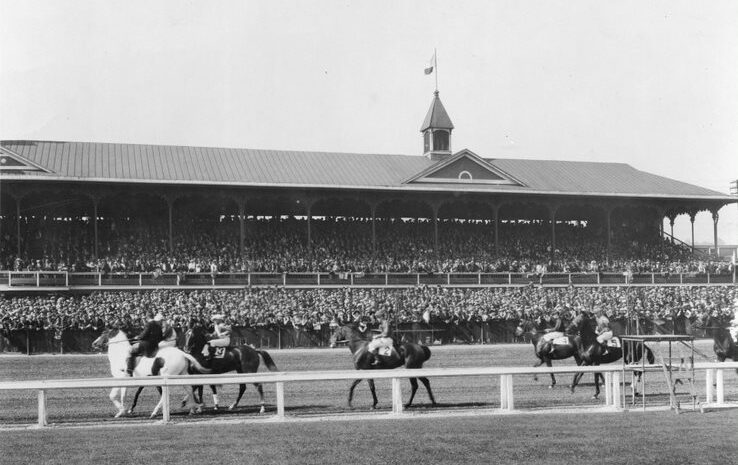
The creation of the Latonia Racetrack in 1883 (it was located where the current Latonia Shopping center stands on Winston Avenue) accelerated growth in the area. The first race was held June 9, 1883. Eventually the track would include a landscaped infield with a lake, a massive grandstand, a clubhouse and multiple barns and outbuildings to accommodate the horses and supplies. The racetrack brought many people to the community, both to live and work. The first Latonia Derby was held in 1888. For many years, the crowds attending the Latonia Derby rivaled those attending the more famous Kentucky Derby in Louisville. The track enclosed in 1939. One year earlier, President Franklin D. Roosevelt spoke to a large crowd seated in the grandstand.
The center of the neighborhood, where Decoursey, Winston and Southern avenues converge, became known as Ritte’s corner and still serves that purpose today. In 1893, electric streetcars replaced the horse drawn system and, as a result, residential development boomed. By 1895, the population of the area had reached 1,500. Residents soon began demanding police and fire protection as well as schools. To meet these needs, the neighborhood was incorporated in 1896 as the city of Latonia—taking its inspiration from the old springs to the north.

A combination school, firehouse and city hall was constructed and the little city began making improvements, including extending water service. Churches also began to be established during this time including Latonia Christian, Latonia Baptist, Calvary Baptist, Trinity Methodist, St. Stephen Episcopal and Holy Cross Church.
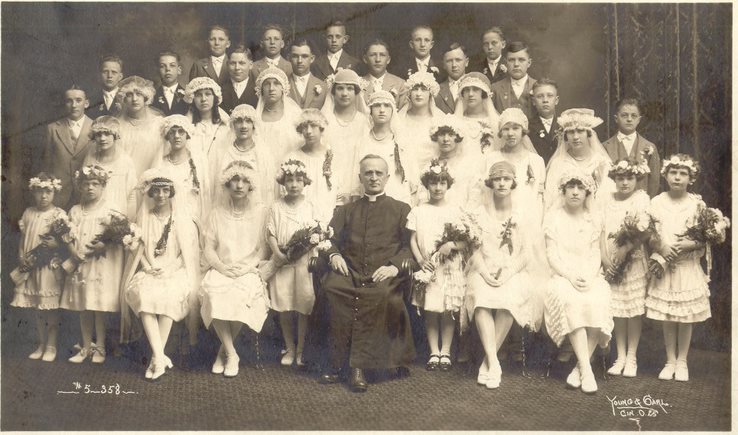
The earliest known school in the area was Holy Cross Elementary, which was established in 1890 along with the church. The current church, a historic and visual landmark of Latonia, was dedicated in 1908 at the cost of $50,000. A new elementary school followed in 1914 and eventually a co-educational high school was established. Both schools were under the care of the Sisters of St. Benedict and lay-teachers. During its height, Holy Cross Elementary and High School enrolled over 1,000 students.
The rapid expansion of the city, combined with the free spending habits of the city fathers, resulted in a considerable debt. Tax revenue was simply not enough to cover expenses. Cost cutting measures were put into place, but they ultimately could not meet the needs. In 1908, the residents of Latonia voted for annexation to Covington. This officially took place in 1909 and Latonia reverted back to a neighborhood.
The annexation deal with Covington brought significant benefits to Latonia. Covington fire and police protection were extended to the neighborhood. Also, Latonia residents now had access to the Covington Independent School District, including Holmes High School. Eventually the small Latonia School was replaced by three district schools. Eight District School with its imposing tower was located at 38th and Locke streets. Ninth District was constructed at 23rd and Graff streets and later received an addition. Ultimately, this building was demolished and replaced by the current structure. Tenth District School was located on Decoursey, between 45th and 46th streets.
Latonia was specifically known for one business by several generations of children. Johnny’s Toys operated in the neighborhood for decades. The store ran a birthday club that allowed children to receive a postcard with an attached key each year. Children and their parents brought the key to the store and were able to enter the castle constructed under the steps to select a small birthday gift. Of course, it did not hurt that many parents also did a little more shopping while they were in the store.
Today, Latonia continues to be one of Covington’s largest neighborhoods. It is a mixed community of residents and businesses. It has never really lost its identity. Many residents will still tell you they live in Latonia and continue to use Latonia as their mailing address—112 years after annexation!
By David E. Schroeder, executive director of the Kenton County Public Library
