

Northern Kentuckians found many ways to stay cool in previous decades
The summer of 2022 has been particularly hot and humid. This invariably brings up discussions among friends and families about how they suffered through the summer season in years past using oscillating fans, sitting on the front porches, running through sprinklers, eating ice cream and wading in makeshift swimming pools in the backyard. Our parents and grandparents were resourceful in finding ways to cool off during brutal Northern Kentucky summers.
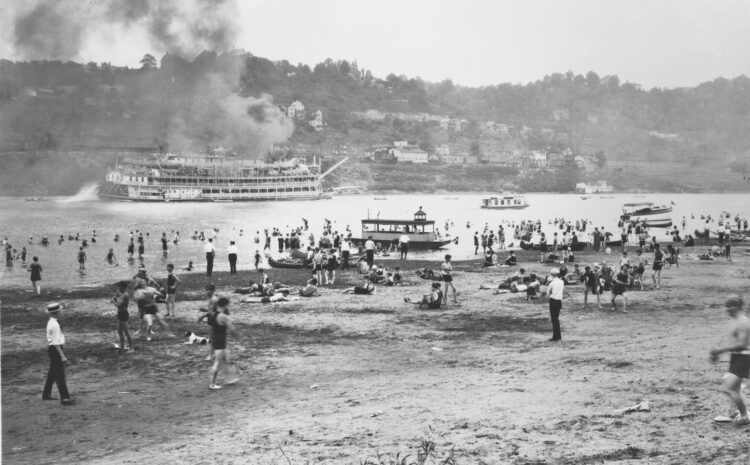
The Ohio and Licking rivers played important roles in the effort to stay cool for preceding generations. Swimming in the river was commonplace for many, especially those living in the crowded cities along the Ohio. Over time, bathing beaches were created in Ludlow, Bellevue and Dayton.
One of the most popular of these establishments was Queen City Beach in Bellevue. Established in 1902, the Queen City Beach included boat rentals, sunbathing areas, a broad sandy beach, designated swimming areas and concessions stands. Located along Ward Avenue, the enterprise also included a 150-foot-long clubhouse and locker room facility. The beach was crowded throughout the week, drawing crowds of thousands to Bellevue, especially on weekends. It was advertised as the “Atlantic City of the West.”
Other beaches also existed, like the Ganders in Ludlow, Riviera Beach in Bellevue and Tacoma Park in Dayton. Tacoma also featured a swimming pool. Pollution and the construction of dams upriver that kept the water level high ultimately put an end to the beaches.
The Ludlow Lagoon Amusement Park also was a great place to stay cool in the early years of the 20th century. Constructed around a large lake, the Lagoon offered a bathing beach, boat rentals, walking trails and several water-themed amusement rides including the famous Chute-the-Chutes. The park was open from late spring through early fall and drew crowds of 30,000 on weekends. Other rides included a roller coaster built over the lake, an automobile aerial ride through the woods and a midway shaded by an alley of trees.
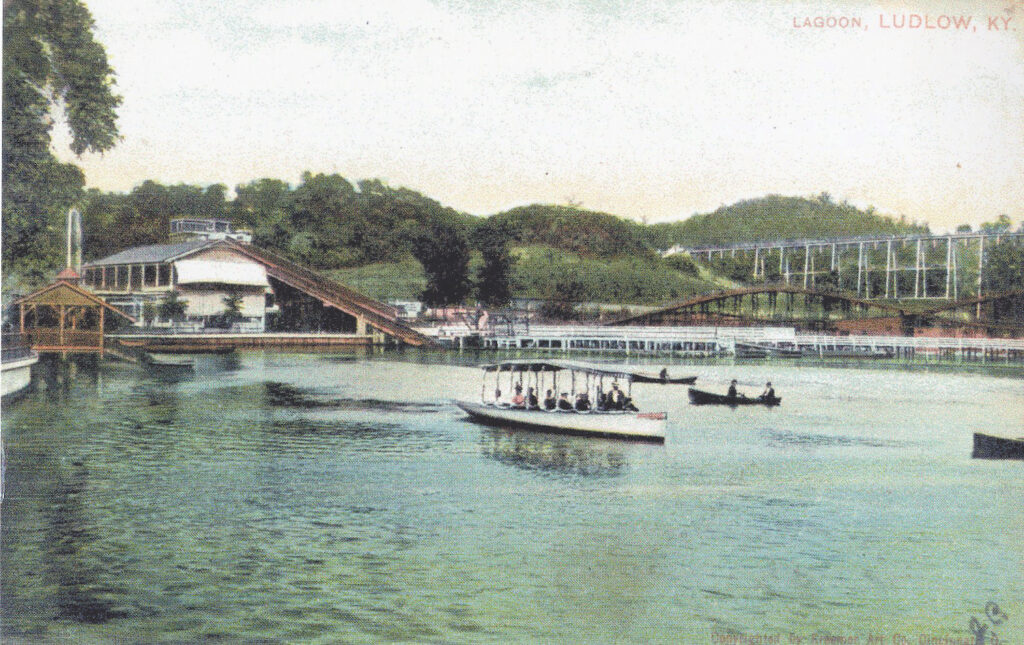
The Lagoon opened to the public in 1894 and became popular with residents on both sides of the river. Ultimately, a flood and motorcycle accident in 1913, extensive damage from the 1915 flood and war-time prohibition of beer in 1917 led to the park’s demise.
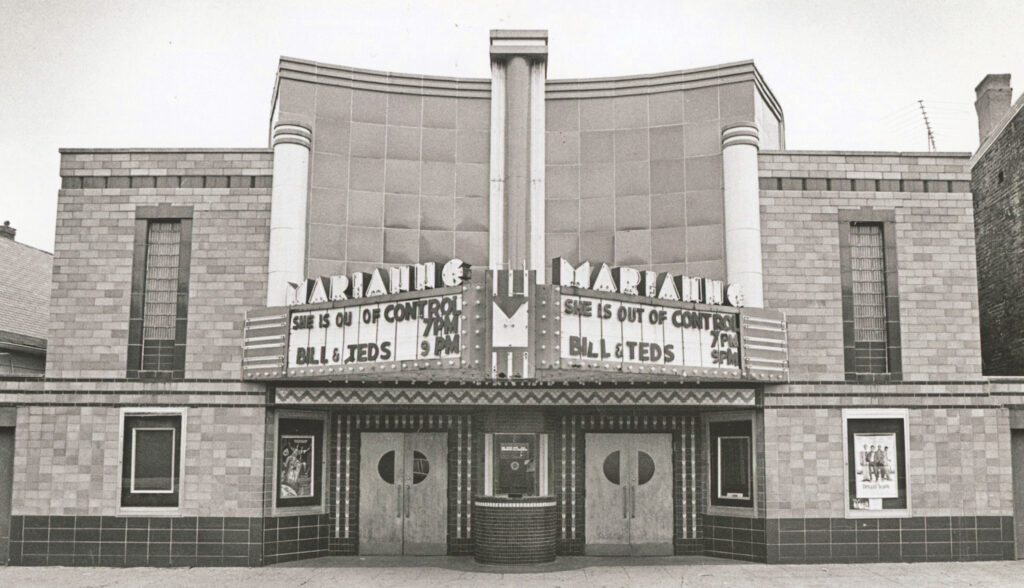
Movie theaters also played a key role in keeping Northern Kentuckians cool through hot summers. Most theaters were constructed or retrofitted to include air-conditioning in the 1920s. Larger cities like Covington and Newport were home to a dozen or more theaters. Even smaller cities like Ludlow, Bellevue, Dayton and Ft. Mitchell also had modern air-conditioned theaters. On sweltering summer days, Northern Kentucky theaters were filled with young and old trying to keep cool and enjoying a good movie, cartoons and news reels. Double features allowed you to stay inside for even a longer period of time.
Parks were also popular places to stay cool. Most had a wading pool or other water features that provided a little relief. Others provided picnic areas under the trees and were conveniently located in the more densely populated areas of the region.
The most popular park in Northern Kentucky was Devou. The park offered swimming pools for girls and boys, fishing and boating on Prisoner’s Lake and cool shady places to picnic and relax with family and friends. During particularly brutal summers, it was not unusual to see entire families walking up the hill to the park with their bedrolls and pillows to sleep under the stars. Sleeping outdoors with the mosquitos was preferable to sleeping in a stifling house where temperatures could reach 100 degrees.
Swimming pools also became popular in Northern Kentucky. The establishment of country clubs meant access to pools for the upper middle-class and the wealthy. The establishment of Highland Country Club (1896), Ft. Mitchell Country Club (1904) and Summit Hills Country Club (1930) ultimately included swimming pools and golf courses. Both provided calm and quiet places to cool off and have fun.
Middle and working-class families often could not afford membership in a country club, but they could pool their resources and build private swim clubs. Such private swim clubs became common in Northern Kentucky. The first swim club in Northern Kentucky was Triple E established in 1958. The Ludlow-Bromley Swim Club was organized in 1959, followed by Bluegrass and Cherry Hill in 1961. Beechwood, Ft. Thomas, Brookwood, Taylor Mill, Oakbrook and others followed. Many of these clubs continue to exist and provide water safety courses, recreational activities, swimming and diving teams and, of course, the allure of crystal-clear water and good company.
As times have changed, so have our ways to keep cool. Air-conditioning has been a great achievement; however, it has also made us more isolated from our neighbors and friends. Perhaps, a return to some good old-fashioned porch sitting would do all of us some good. Stay cool out there and enjoy the weather—winter will be here before you know it!
By David E. Schroeder, executive director of the Kenton County Public Library
