

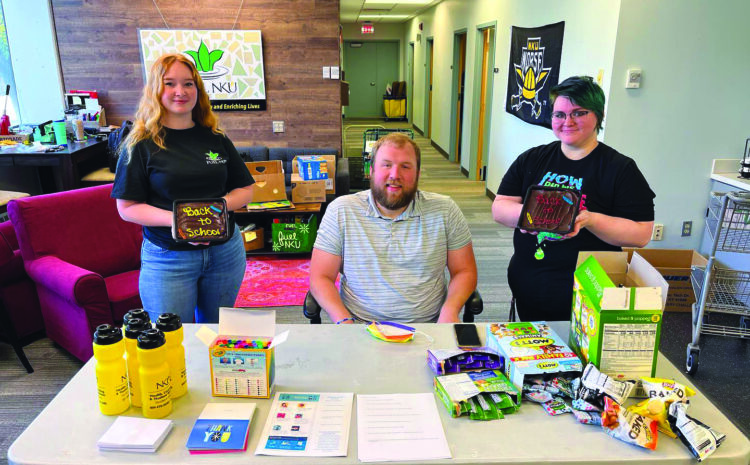
NKU’s on-campus food pantry is combating food insecurity
From a single shelf in a social work professor’s office to a 2,300-square-foot space that feeds hundreds of students, FUEL NKU is achieving its mission of combating food insecurity and enriching students’ lives.
FUEL (Feeding the University and Enriching Lives) was started in the spring of 2013 by Dr. Jessica Averitt-Taylor, a professor in the Department of Counseling, Social Work and Leadership at Northern Kentucky University (NKU), and NKU social work students as a way to address campus hunger.
“A faculty member saw an issue with a couple of her students in class and said, ‘This is something that I want to address: Making sure that my students are fed so they perform well in the classroom and outside the classroom,’” says FUEL NKU Program Coordinator Nick Bliven. “[Averitt-Taylor] started the movement in her office [so] that students could come back during her office hours and get food. And then it really spiraled into what it is today.”
With soaring food prices and student hunger on the rise, on-campus food pantries, like FUEL, are vital for many students—especially those students who remain on campus during holiday breaks.
Thanksgiving Cheer
Every year, FUEL hosts a Thanksgiving event for students—filled with plenty of turkey, stuffing, and mashed potatoes to go around. The event allows students to mingle with one another before the break. International students who may not be familiar with American Thanksgiving also have the opportunity to learn about the holiday, Bliven says.
During the pandemic, FUEL relied on to-go bags to give students a dose of holiday cheer. This year, the organization is resuming in-person events, which Bliven says he’s excited about.
“I think that’ll be really effective in honing down that sense of community. [Students] think of our food pantry but we also want students to think about community members in general and think about our sense of community as a whole—making sure that, even over this holiday break, students are still able to come together and have a nice meal,” Bliven says.
The event—in partnership with Chartwells and Kroger—is hosted on the Monday before Thanksgiving, ensuring that students can stock up on food before the break.
“We created bags full of staple items and those were very successful as well,” Bliven says. “It was like a grab-and-go bag. You can take it home. You would have some food for over the break since FUEL NKU is closed, as the university’s closed for those couple of days.
“We’re able to still, at least, offer some support for students. Maybe they’re still living on campus. Particularly, our population of international students who live a long way to get back to their home.”
Enriching Lives
Since classes have resumed in-person on campus, Bliven says student outreach has increased. Taking an idea from another institution, Bliven says FUEL has put kiosks around NKU’s campus, increasing students’ access to food in between their schedules.
“Our campus is not enormous, but it’s still a little big and some people don’t know where [FUEL] is, so [we’re] bringing the food to them so they don’t necessarily have to think about it,” Bliven says.
One of FUEL’s major on-campus partners this year has been Steely Library, a popular spot where many students hang out, study and recharge. At the library, Bliven says students can get a “FUEL Up” bag that has a drink, meal and snack.
“Students are able to have some sort of nourishment, maybe while they’re in the library or on the weekend when we’re not able to be open,” Bliven says.
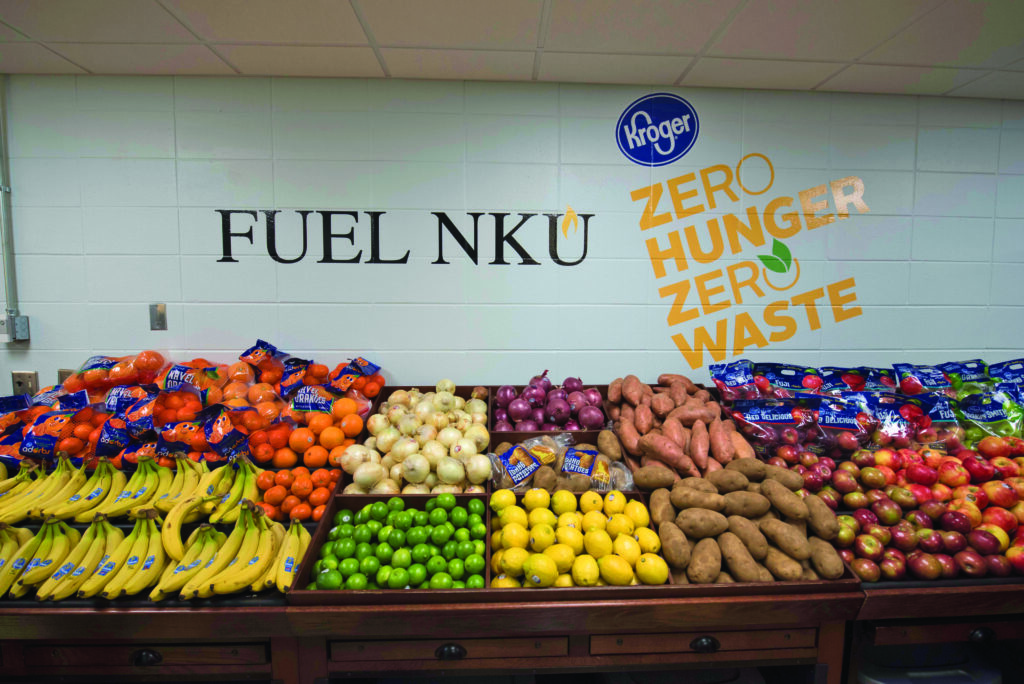
Students are also able to grab food at various on-campus academic buildings and campus housing, which Bliven notes is important for students during holiday closures or on weekends.
“It’s a need and we want to support—understanding that even if you do have a meal plan, there are still holiday closures, weekends, and maybe they have limited hours,” Bliven says. “I just want to make sure that we’re not hindering any accessibility issues for students.”
Outside of food staples, FUEL also provides basic hygiene and household products. Items like toothpaste, shampoo, laundry detergent, paper towels and toilet paper can easily dent a college student’s wallet and affect their academic performance if they aren’t taking care of themselves.
“If you’re unable to practice good hygiene, then you’re probably not going to be successful in the classroom… So wanting to make sure that we’re setting our students up for success holistically is something that’s really important to us here at FUEL NKU,” Bliven says.
Bliven says in the last academic year, FUEL reached 70% of its international population, adding that he wants those students to always feel included at NKU. Last fall, FUEL created an international market at the pantry to celebrate and highlight other cultures.
To keep FUEL accessible for as many students as possible, Bliven says they don’t require information or ask about income or any other type of eligibility. Students simply need to be actively enrolled at NKU to utilize FUEL.
Some students have told Bliven that they feel they shouldn’t be using the pantry, or that others need it more. Bliven always tells students they’re welcome to use FUEL no matter what their circumstances are.
“If you had a flat tire—if you had something that happened, an extenuating circumstance in your life, would you be able to pay for it? Would you be able to support yourself after something happens?” Bliven says. “You just had to pay tuition, do you have enough money to support yourself for food and other essentials?”
Community Support
Community members can get involved and support FUEL’s mission. On FUEL’s website, there are various ways people can help, whether it’s through a monetary donation or donating current-need items. Community members can also host a donation drive to curate items FUEL needs.
“Looking at the items on there, seeing ‘OK, what are a few things that I could ask my friends to support,’ this really is a needed service for a lot of students on campus,” Bliven says. “Making sure they get in a collective effort for the community in Northern Kentucky as a whole is something that I would like greater [Northern] Kentucky to get behind.”
