

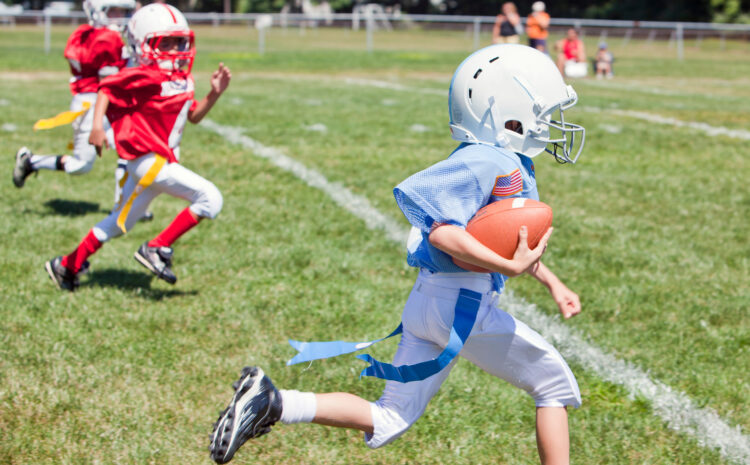
How to help your child get back into athletics this fall without injuring themselves
Fall doesn’t just mean back to school—it also means back to sports. While you and your child may be excited to get back to their sport—whether it be football, soccer, cross country or field hockey—experts advise that you don’t jump back in too quickly.
“The best advice is to not jump right in with both feet, especially if you’ve not been active,” says Dr. Jon Divine, a professor of orthopedics and sports medicine at the University of Cincinnati and the director of Primary Care Sport Medicine within the Department of Orthopedic Surgery at UC Health. He practices in several locations throughout the Tristate, including the UC Health Physicians Office in Florence (68 Cavalier Blvd.). “There’s a 10% rule that says that you shouldn’t increase your volume of training more than 10% if you want to avoid an overuse injury. … If you exceed that, you’ve got [a higher] chance of developing an overuse injury from shin splints to a sore knee to a stress fracture.”

Divine, who is also the head team physician for University of Cincinnati Athletics, recommends athletes and their families talk to their coaches and trainers to develop a training plan that helps athletes gradually—and safely—increase their activity.
While a personalized plan (based on how active your child has been through the summer months) is always best, Divine does have several tips for athletes and their families as they start training.
1. Don’t focus on just one type of training. Beacon Orthopaedics and Sports Medicine, recommends incorporating a mix of flexibility training, strength training and aerobic exercise in the pre-, regular and post-season to avoid injury.
Divine recommends core training as well. “I think all of us—young, old included—would benefit from core exercise training, core muscle training. Not just sit-ups, but a myriad of exercises that can strengthen the core and probably reduce a lot of overuse injuries,” he says.
2. Climatize appropriately if playing outdoors. “If this weather persists throughout the summer, it might not be too hard in August, but if we get a break in the weather and it’s not as hot and then it heats up again when the seasons all start in August, there’s a bigger risk for heat-related illnesses and things like that,” says Divine. Symptoms of heat-related illnesses include losing weight too quickly or not regaining weight after an activity, fatigue and lack of motivation.
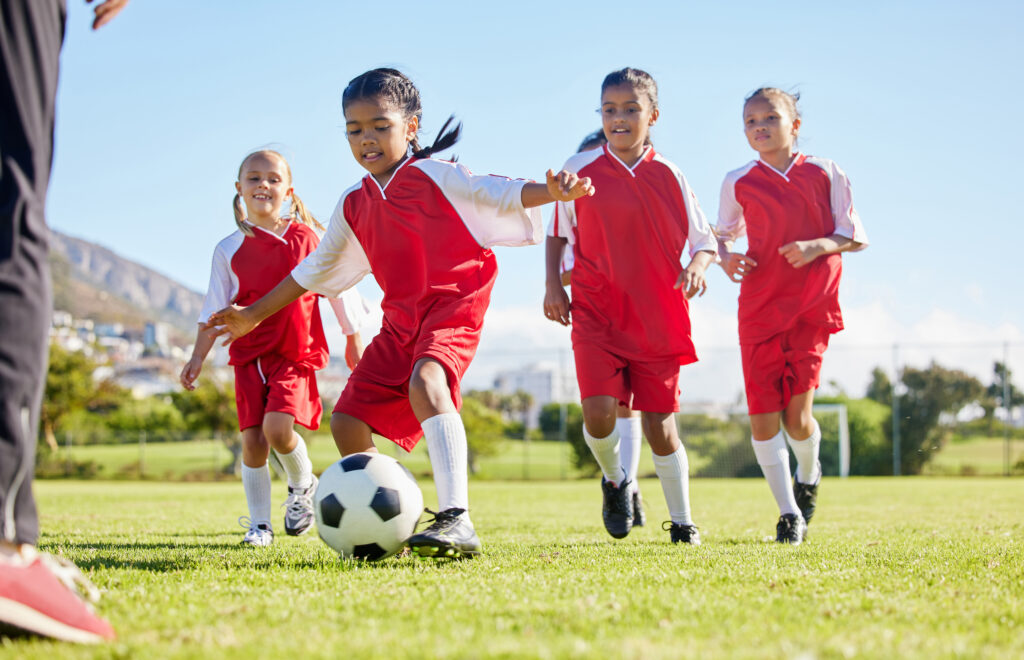
He encourages young athletes to work out without air conditioning or outside to help them get used to temperatures. “The strength and conditioning coaches don’t like it because everything rusts, but at the same time, you’re going to condition a little bit better just by being more exposed to that,” Divine says.
3. Warm up, even when working out. Beacon recommends jumping jacks, running or walking in place for two-to-five minutes and then stretching, holding each stretch for at least 30 seconds, before moving into a workout.
4. See a doctor if something doesn’t feel right. If something has hurt for several days, you’ve done the usual advice for caring for an overuse injury—resting, activity modification, icing, elevation, over-the-counter pain medication, etc.—and it still hurts, it’s probably time to see a doctor.
“You do that and the pain persists, then that’s worth coming in,” he says.
Other signs that point toward seeing a doctor include swelling within a joint and localized redness or swelling that’s not due to direct trauma.
Overuse injuries can happen to people of any age, but student athletes should watch out for pain in their knees (particularly in front of the knee around the kneecap) and shin splints, which can be caused by not having proper footwear or running on hard surfaces.
And while many of our parents and grandparents pointed to growing pains as the source of pain in the hips or knees, it can sometimes be something more.
“I’ve seen a few cases where the growth plate that’s contributing to the pain can actually be injured and it may need a little more attention than just resting and staying off of it,” he says.
If you want to help your child safely get back into athletics, Divine says there are things you can do, too.
“It can range from doing the exercises with your kid—kids probably younger than say 10, 11 or 12, as they’re still probably interested in doing some things with their parents,” says Divine. “I’ve got several patients that’ll go to the other extreme and their parents will hire a personal trainer or strength training lessons, that kind of thing. The personal trainer’s a thing I see utilized a lot, and that’s a good way to go, but it can be expensive. So if you can’t afford that, then I think is just trying to encourage them and keeping an eye on ’em, just doing regular parenting skills to make sure they’re not doing too much. Or if you see that they’re spending a lot of time playing video games and being inside, then that’s not a good sign either. And you have to encourage ’em to get back with their, their program.”
