

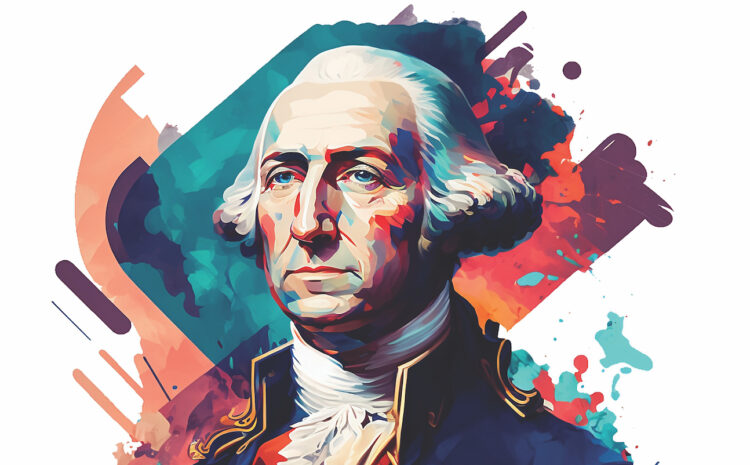
The first president developed some great ideas for today’s social media environment
In 1746, a 14-year-old George Washington had a school assignment to translate 110 French maxims into English. The assignment itself lends itself to humor.
“But teacher, I want to be the father of a new country. I don’t want to learn about what some Frenchies think about my manners,” he could have said. In fact, I suspect Pre-Revolutionary teenage hormonal angst resulting from the assignment led to the French and Indian War.
Classroom drama notwithstanding, the assignment led to Washington’s “Rules of Civility and Decent Behaviour in Company and Conversation,” a detailed exploration of morals, virtues and manners from a Colonial teenie bopper that would become America’s first president.
Recently, following a trip through the Valley of the Shadow of Death known as social media, I dusted off a copy of GW’s schoolwork. It appears everyone on the internet today could use a good dose of Washington’s rules. In fact, perhaps George should have written the Terms and Conditions for use of any interactive app.
Granted, Washington’s rules were written nearly three centuries ago and many of them do not offer useful guidance to today’s posting public. For instance, instruction on the proper way to dispose of head lice in the company of others may be a tad outdated. Psyche! Just kidding. There exists a plethora of instructive YouTube videos on removal of head lice.
Setting aside the effectiveness of plastering your scalp with mayonnaise to treat head lice, spending an hour on any social media platform reading the stream of consciousness meanderings of your next-door neighbor makes you realize that many could use a schooling on civility.
Washington’s Rule No. 1—”Every action done in company ought to be with respect to those that are present”—is likely far too lofty a goal for which to start. As a service to humanity, I have passed along this particular rule to the speaker of the United States House of Representatives and the producers of drive-time talk radio.
Instead, let’s start with a simple objective, like Rule 73: “Think before you speak…” (or in modern parlance, “post a video on TikTok”). If the father of our country would have posted a video of himself tossing a silver dollar across the Potomac, I’m sure it would have been followed by comments ranging from his underdeveloped arm speed to criticism of his abandonment of the gold standard for coin tossing.
Still, thinking before you post is a good idea. Removal of unthoughtful gibberish from daily life could drastically increase the hours in a day left to actually get something accomplished.
Literal finger pointing seems to be quite popular in 2023. For digital digits, try working on Rule 76: “While you are talking, point not with your finger at him of whom you discourse nor approach too near him to whom you talk, especially to his face.”
Each time this rule is broken the offending person should have to put a crypto dollar in the YouTube Swear Jar.
For those who preach politics online and believe Washington’s rules are meant for those on the side of the aisle opposite theirs, heed Rule 22: “Show not yourself glad at the misfortune of another, though he were your enemy,” and Rule 65: “… scoff at none although they give occasion.” And by the way, according to Rule 16: “… roll not the eyes.”
Afraid none of these rules are workable in today’s toxic political and social environment?
Then George Washington’s final rule is for all citizens of the United States: “Labour to keep alive in your breast that little celestial fire called conscience.”
Darn, that’s a good line. I think I’ll post it on Facebook.
Rick Robinson is the author of the award-winning series of Richard Thompson political thrillers available on Amazon and at bookstores.
