
What is vintage bourbon and how should you go about trying it?
Kentucky is Bourbon Country and our NKY region has been touted as bourbon’s Northern Gateway. While we may be the northern gateway for bourbon, are we the indisputable epicenter of vintage bourbon?
In 2018, Kentucky passed what is referred to as the Vintage Spirits Law. “Distilled” down, this law enables establishments holding the proper alcohol beverage license to purchase certain bottles from unlicensed private persons. Several states have a riff on the law, but none so generous or as successful as the one here in the Bluegrass.
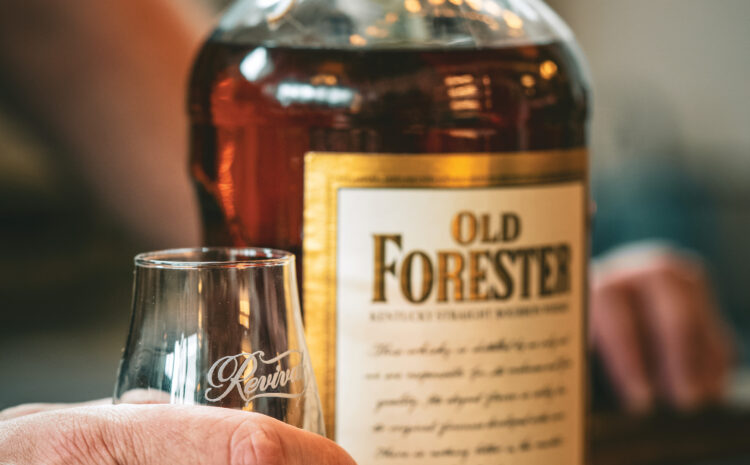
Kentucky’s Vintage Spirits Law created a sizeable and unique draw, though there is one Northern Kentucky shop that relies almost exclusively upon selling not only vintage and rare bourbons, but spirits of all kinds including gins, rums, vodkas, scotch, tequilas, etc. This shop is one I am proud to have co-founded: Revival Vintage Spirits and Bottle Shop. Revival, alongside other Northen Kentucky establishments, account for some of the highest number of vintage spirits purchases and sales in the state of Kentucky.
One of the most asked questions that I receive, not only at Revival, but as an alcohol beverage law attorney, is, “What exactly is a vintage bourbon?” As a lawyer, I defer to the law, but as a bourbon aficionado I defer to my experience, my community and what I have learned from my co-founder and vintage spirits savant, Brad Bonds.
Our shop knows vintage as “dusty,” meaning a little dust on the bottle (cue David Lee Murphy). Kidding, but only partially. In our shop, a true “dusty” or “vintage” bottle has a tax strip, which would be on most bottles before 1985. (After 1985, the government no longer required bottles to have the tax strips draped over the neck.)
Revival may describe a “dusty” by features on the bottle, but, as cliché as it may sound, it’s also about what’s on the inside. A “dusty” was made during a time when legal regulations and the demand for the spirit were less. This means dusty bourbon barrels were made during a time when production was slower and trees had more time to grow. This allowed barrels to be comprised of old growth oak, which produced a rich, complex and nuanced flavor. Even the water that was used in the process was different, arguably unfiltered compared to today’s standards.
The process, ingredients and environmental factors undoubtedly impact the final product. A “dusty” spirit alongside its modern counterpart inevitably evidences a very different taste. A taste we refer to as the “dusty funk.” It’s the reason we invite folks to #TasteHistory and try a side by side.
There are many opportunities in our region to explore bourbon and its origins, and to decide for yourself what you consider “vintage” or simply what you like. The proof of each distilled spirit is on the label and required by law, but the proof of its vintage attributes are hidden in the puddin’.
I encourage folks to determine what is palatable to them along their own spirited journey by trying different spirits, but I also encourage all to enjoy the story behind the spirits, the people that made them and the community that supports them. I think we can all cheers to that!
Shannon Smith is a third-term Covington city commissioner, local attorney, serial entrepreneur and former professional athlete. She is the owner of an award-winning law firm, The Law Offices of Shannon C. Smith, and opened the world’s premier vintage spirits shop, Revival Vintage Spirits and Bottle Shop.
