


NKU helps students succeed in the arts and in life
The first show Mike King, associate acting/performance professor at Northern Kentucky University, was paid to perform was Shakespeare’s Twelfth Night. Now, coming full circle, the last play King will direct for NKU’s Theatre Program is the same show—debuting in the Stauss Theatre Feb. 16-26.
“I’ll bring 38 or 39 years of being involved with Shakespeare plays—not all of them all the time—but going back to the first time I did Shakespeare, all the things I’ve learned,” King says.
Even though Shakespeare is not everyone’s cup of tea, King has taken creative liberties by changing a few key things about the play. Rather than being set in the traditional Elizabethan era, King set his adaptation on a Mediterranean island in the 1950s.
King says the audience will have an easy time understanding who the various characters are—some of which are played by opposite genders—due to their distinct costumes.
“I always make that my primary focus for Shakespeare is that the actors need to know what they’re saying and what it means to them, so that they can then convey that to the audience,” King says. “I think, done well, Shakespeare can appeal to just about any audience. There’s something there for everyone.”
Michael Hatton, head of the Theatre and Dance Program at NKU, understands that some patrons might have hesitancy going to see a Shakespeare play due its heightened text and other elements. Hatton himself says he was “late to the party” when it came to his enjoyment of Shakespeare but now is fond of his work, Twelfth Night being his favorite.
Hatton says he loves this play for many reasons, including the characters, text and universal experiences.
“I think some of the very best characters that exist in his canon, characters and lines that never ever, ever get old. They still delight me to this day thinking about the interactions, and the silliness that happens between some of these characters,” Hatton says. “Even though we don’t have a lot of dukes and duchesses running around in our country, the very real experiences that these characters have are things that are universal—that we can connect with and we can laugh at or that our heart aches at with them.”
Everyone has been in love or had a crush at least once, Hatton says. Or have experienced the loss of someone important. These experiences allow the audience to connect with the material they’re watching, even if it may have been written centuries ago.
“These things are universal experiences and that’s why I think this play is just so easy to connect with and so easy to fall in love with as an audience, even if you’re maybe a little afraid of Shakespeare. This is a perfect treat for yourself to fall in love with something,” Hatton says.
When choosing shows for the season’s lineup, Hatton says, they evaluate many things, such as education, variety, relevancy and enjoyment.
Questions that are asked include: What will students gain from this work? Will a student have access to every style of theater and dance during their education at NKU? Is the work socially relevant to what is going on in the world today? Will the audience enjoy this piece?
Hatton says they try to include at least one or two pieces that touch upon something that is going on culturally and socially.
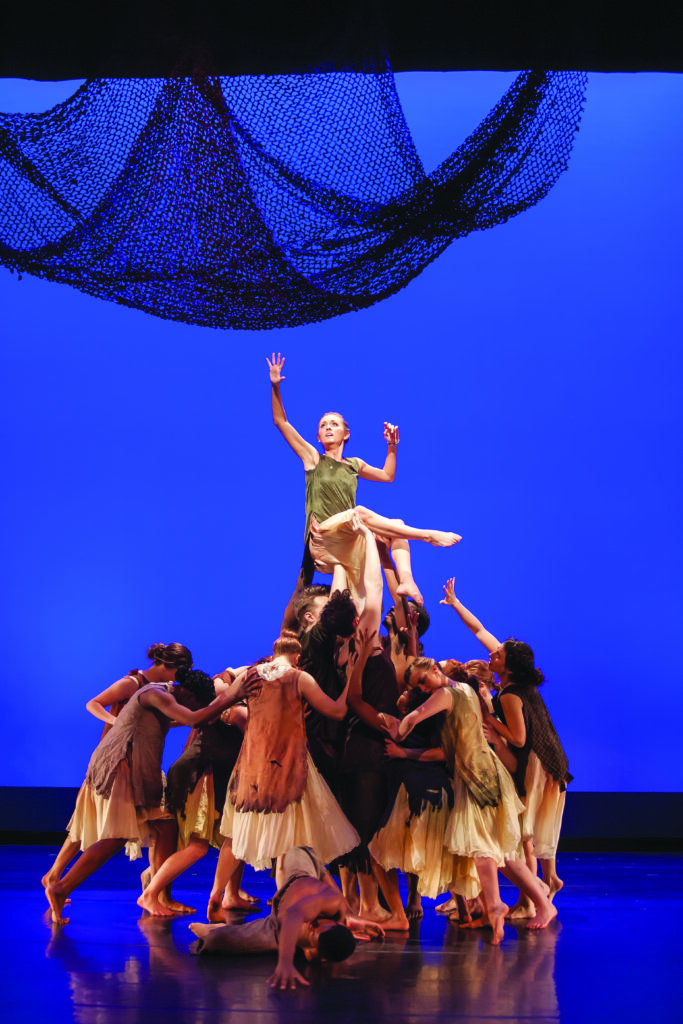
“One of the two reasons why we do theater in general is to engage people in conversations and to help them start a conversation and to get them thinking. Sometimes, that means making them a little uncomfortable because they may want to think of things in a different light than they had thought of it before. But that’s OK, that’s a good thing,” Hatton says. “Just like growing pains when you’re going through puberty and your bones start to grow and your feet, your legs hurt. That’s a good thing. It’s a positive process.”
Being the largest theater program in the state of Kentucky, Hatton says he takes pride in ensuring students are prepared to be professionals in their respective arts. Citing a World Economic Forum article discussing what Fortune 500 companies look for, in terms of job skills, for their employees, Hatton says each and every one of those skill sets is developed within the School of the Arts (SOTA).
“These are skills like collaboration, communication, the development of creativity, being critical thinkers, developing a strong work ethic and discipline,” Hatton says. “What I love about that is that it shows our students—and it shows the parents of our students and it shows members of our community—that pursuing a career and training within the fine and performing arts is not only a way for you to pursue that, a career within that discipline, but it also prepares you for success within careers and in life, in career paths that might be parallel to or adjacent to theater and dance.”
Hatton loves that SOTA can provide students with real skill sets and development for their personal success, adding that the school works with students through close and personal mentorships.
“We’re not a cookie cutter program. We’re trying to help our students find what makes them unique, what they bring to the table and how they can use that for getting hired, for employment, for the creation of their own business or whatever it might be,” Hatton says. “I love the fact that we can help the students to see what is unique about them and how they fit into the larger world of theater, as opposed to trying to fit into what maybe society thinks they should or how they should fit.”
